Quick answer
Give your kids one clear rule ("we only open the door for people we're expecting, and only with permission"), a short script to use, and lots of practice through role-play. Teach them never to say they're home alone and never to open up for deliveries or people who say they know you. The easiest way to make the rule stick is to give kids a safe way to see who's there without going near the door. That's why we recommend the Vital Smart Door Home: a no-app video doorbell with a portable indoor monitor that a child can check from the couch.
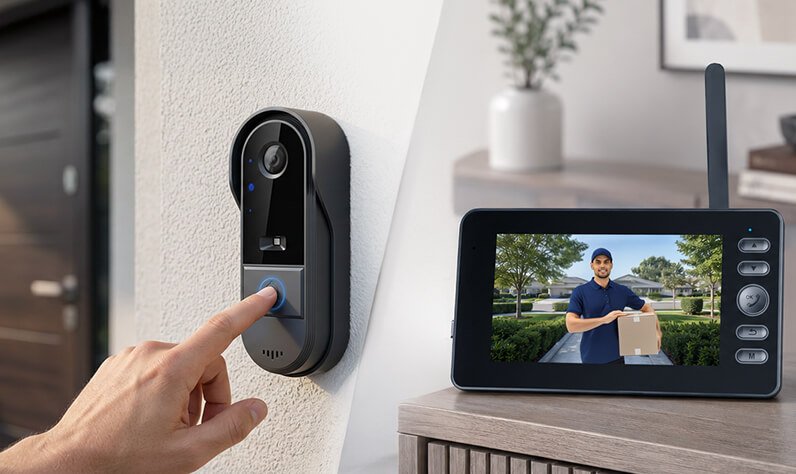
The doorbell rings. Before you can say "wait," your seven-year-old has already pulled the door wide open to see who it is. Almost every parent has lived this moment. Kids are curious and helpful by nature, and a knock at the door feels like an event. The goal isn't to make them afraid of every visitor. It's to give them a simple routine they follow automatically, whether you're in the kitchen or they're home alone after school.
Why kids open the door (even when they know better)
- Curiosity: a ring or a knock is exciting, especially for younger children.
- Politeness: kids are taught to be helpful to adults, and a friendly voice saying "I have a package for your mom" sounds like a reason to help.
- No way to see who's there: if the only way to find out is to open the door or peek through a window, they'll open the door.
- Rules that are too vague: "don't talk to strangers" doesn't cover the neighbor, the delivery driver or "a friend of your dad's."
Step 1: set one clear family door rule
Safety guides from police departments and child-safety organizations tend to agree on the basics: kids should check who's at the door first, never open it to someone they weren't told to expect, and never reveal that they're home alone. Turn that into a rule short enough for a child to repeat:
- "We only open the door for people we're expecting, and only when a grown-up says yes."
Notice what the rule doesn't depend on: whether the visitor is nice, wears a uniform, or says they know you. Thinking in terms of "expected and approved" instead of "stranger or not" removes the guesswork.
Step 2: house rules by age
| Age (approx.) | What they can do | What they don't do |
|---|---|---|
| Under 6 | Come and get a grown-up when the doorbell rings | Touch the lock, answer, or talk through the door |
| 6–9 | Check who's there on a screen or with an adult, then tell a grown-up | Open the door or say who's home |
| 10–12 | Use a short script through the door or intercom; call a parent if unsure | Open for unexpected visitors or deliveries |
| Teens home alone | Open for pre-approved visitors only; ignore or answer briefly otherwise | Open for "someone who knows Mom," repair people or sign for packages |
Every child is different, so use these as a starting point and adjust to your child's maturity.
Step 3: give them the words
Kids freeze when they don't know what to say, so give them a script. Keep it short and never let it reveal that they're alone:
- To an unknown visitor: "My mom can't come to the door right now. Please come back later." (Or simply don't answer. Both are fine.)
- To a delivery driver: "Please leave it on the porch," or say nothing and let the driver leave a notice.
- To someone who says they know you: "I'll call my mom/dad first." Then actually call.
- If anyone tries to get in or won't leave: stay inside, keep the door locked, call 911.
Step 4: practice with role-play
Rules learned at the kitchen table fall apart when the real doorbell rings. Practice turns them into a habit. Once a week for a month, play out a few scenarios: you ring the bell and pretend to be a delivery driver, a "friend of Dad's," a neighbor asking to use the phone, someone selling something. Praise your child every time they stay inside and use the script. Make it a game, not a lecture; the point is confidence, not fear.
Step 5: give them a safe way to see who's there
This is the step most families skip, and it's the one that makes the others work. If the only way to identify a visitor is to open the door, peek through a side window (where they can be seen), or call out "who is it?", kids will keep doing those things. A screen inside the house changes that: your child can check the door from a safe spot, then decide whether to get a grown-up, use the script or just ignore the bell.
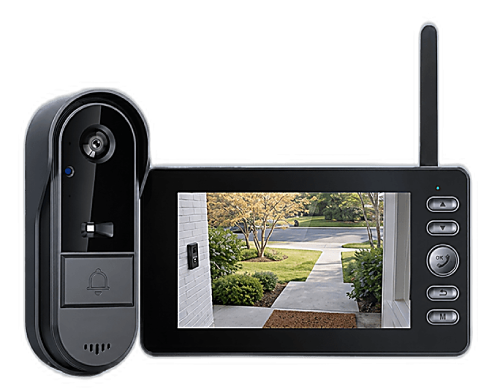
Many video doorbells require a phone and an app, which young kids may not have and which adds passwords and accounts. A simpler option for families is a doorbell with its own indoor monitor. The Vital Smart Door Home works this way: the door camera sends live video straight to a portable handheld screen over a private FHSS 2.4G link, with no WiFi or app involved. We explain how this design works in our no-WiFi video doorbell guide.
Extra tips for kids who are home alone
- Lock up right away: door locked as soon as they get home, including sliding doors and the door from the garage.
- Check in: a quick text or call when they arrive.
- Post the list: who's allowed in, your numbers and 911, on the fridge.
- Phone rule: never tell a caller they're alone ("Mom's busy, can I take a message?").
- Let deliveries wait: packages can sit on the porch until you're home. If porch theft worries you, see what really protects the front door.
The same see-before-you-open approach helps older family members too; we cover it in the best video doorbell for seniors.
Our recommendation: the Vital Smart Door Home
If you want your kids to check the door safely, without opening it, without a phone and without another app to manage, the Vital Smart Door Home is the option we recommend. It's simple enough for a child to use and makes the "look first, open never" rule easy to follow.
- A screen kids can carry: live video appears on a portable indoor monitor, so a child can see who's there from the couch or the kitchen table.
- Two-way audio: older kids can deliver their script ("Please leave it on the porch") without opening the door.
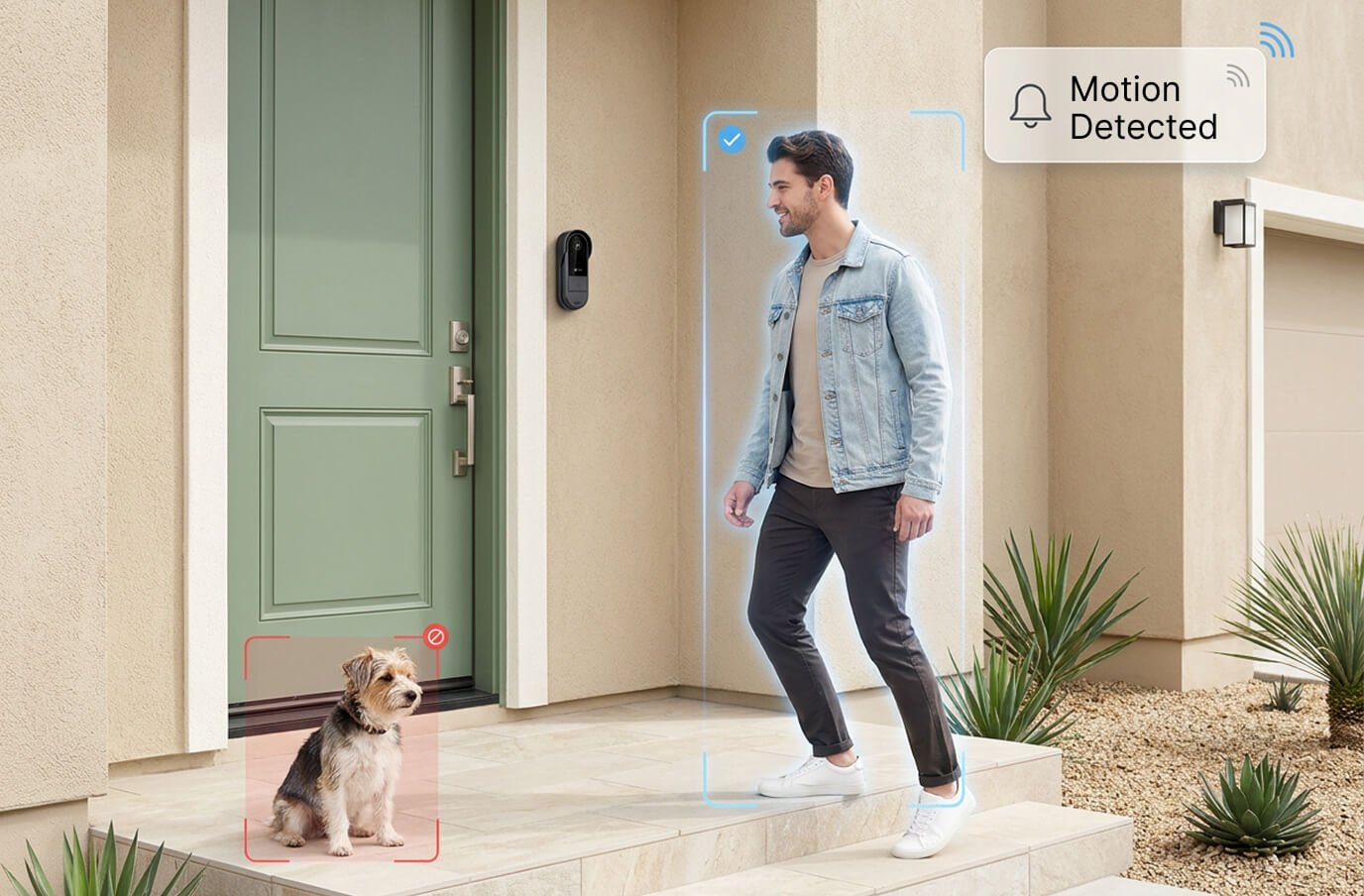
- Night vision and motion detection: a usable view after dark, when knocks feel scariest.
- No WiFi, no app, no account: nothing for kids to log into, no passwords, and nothing online to hack; video stays inside your home.
- No monthly fee: pay once, nothing to renew.
- DIY install in minutes: wireless and rechargeable, mounted with adhesive or screws, no wiring.
One honest note: because there's no app, you can't watch the door from work on your phone. It's designed for answering the door safely when someone is home, which is exactly the moment this plan is about.
Our full review scores it 4.6/5. Current pricing on the official site: 1 unit US$99.99 (regular US$222.20), or the 2-pack at US$89.99 each (US$179.98 total), handy for a front and back door. Orders ship from New Jersey within 48 business hours to the USA and Canada, and every purchase is covered by a 30-day money-back guarantee, so you can practice the family plan with it at home risk-free.
Want more background first? Read about whether video doorbells deter burglars, or start on our Vital Smart Door Home overview.
Frequently asked questions
At what age can a child answer the door?
There's no single legal age, and it depends on your child's maturity. Many families let young children check who's there with an adult present, and only allow older, responsible kids to open the door for expected, approved visitors. A simple rule for every age: never open the door to anyone you weren't told to expect.
What should a child say if a stranger knocks?
Ideally nothing, and keep the door closed. If your family rule is to answer through the door or an intercom, a short script works: "My mom can't come to the door right now. Please leave a note or come back later." Kids should never say they're home alone and never open the door to sign for a package.
Should kids open the door for someone they know?
Many safety guides recommend that kids don't open the door even for someone they recognize unless a parent told them that person was coming. Teach "expected and approved visitors only," and have kids call you first if someone they know shows up unannounced.
What should kids do if a delivery driver needs a signature?
Not open the door. The driver can leave a notice and redeliver, or the package can be left on the porch. Kids can say through the door that an adult will pick it up later, or simply not respond.
How can a video doorbell help kids stay safe?
It lets them see who's at the door on a screen, from a safe spot inside, without going near the door, peeking through the window or calling out. With two-way audio they can give a short answer without opening the door. A no-app model with a portable indoor monitor, like the Vital Smart Door Home, is simple enough for children to use.
Can I watch the door from work with the Vital Smart Door Home?
No. It has no WiFi and no app, so the video goes only to the indoor monitor. That's what makes it private and simple for kids, but if you need to watch the door remotely from work, you'd need an app-based doorbell instead.