Quick answer
Mostly yes — for the crimes that actually happen at your front door. Research interviewing convicted burglars consistently finds most are opportunists who pick easy, anonymous targets and move on when they spot a camera or alarm. A visible doorbell camera also changes the two most common doorstep scenarios: package theft and the "knock test" burglars use to check if anyone is home. What a camera cannot do is physically stop a determined intruder — it deters, documents and warns; it does not block.
What burglars themselves have told researchers
The most useful evidence on deterrence does not come from marketing — it comes from asking the people who break in. In a widely cited University of North Carolina at Charlotte study, researchers surveyed over 400 convicted burglars about how they chose targets. The pattern was blunt: most were opportunists, most checked first whether a home looked occupied and monitored, and a majority said signs of surveillance or an alarm would push them to simply pick another house.
That matches decades of criminology on "target hardening": burglars rarely fight security — they avoid it. The house with the visible camera is not impossible to rob; it is just a worse deal than the identical house next door without one. Deterrence, at the front door, is largely a comparison game.
The knock test — the doorstep crime nobody talks about
Here is the part most people miss: a large share of burglaries begin with a polite knock. The intruder rings the bell, ready with a cover story about a delivery or a survey. If someone answers, they leave. If nobody answers, the house just failed the occupancy test.
This is where a doorbell camera with two-way audio quietly earns its keep. You can answer every knock from inside — or, with a portable monitor, from any room — without opening the door and without revealing whether you are home alone. The house always "answers", so it never advertises itself as empty.
Package theft: the most common porch crime
Porch piracy is far more frequent than burglary — surveys consistently find that tens of millions of Americans and Canadians have had at least one package stolen. Package thieves are the purest opportunists of all: they work in seconds, in daylight, and depend entirely on not being seen or recorded.
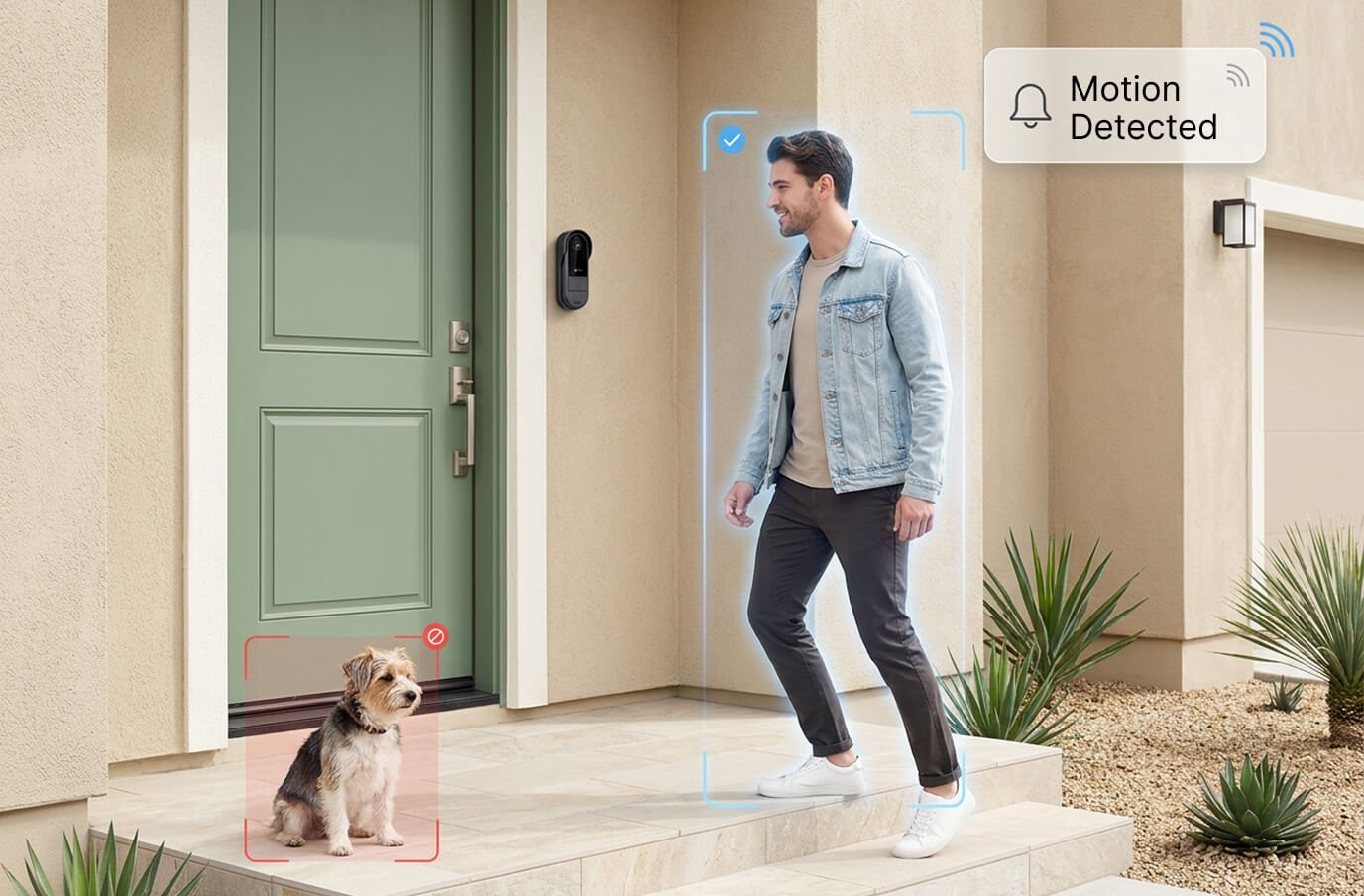
A camera pointed at the doorstep attacks exactly that. Motion alerts tell you the moment a courier — or anyone else — steps onto the porch, so packages spend less time sitting outside, and would-be thieves have to gamble on being watched live.
What a camera honestly cannot do
- It cannot physically stop someone who has decided to force entry — locks, reinforced strike plates and lighting matter too.
- It cannot cover what it cannot see — a front-door camera does not watch the back gate or ground-floor windows.
- It deters opportunists best; a targeted, planned break-in is a rarer and harder problem than any single gadget can solve.
Any honest security plan is layered: decent locks, lighting, the habit of actually answering the door, and a camera as the visible, recording, always-awake layer at the point where most doorstep crime starts.