Quick answer
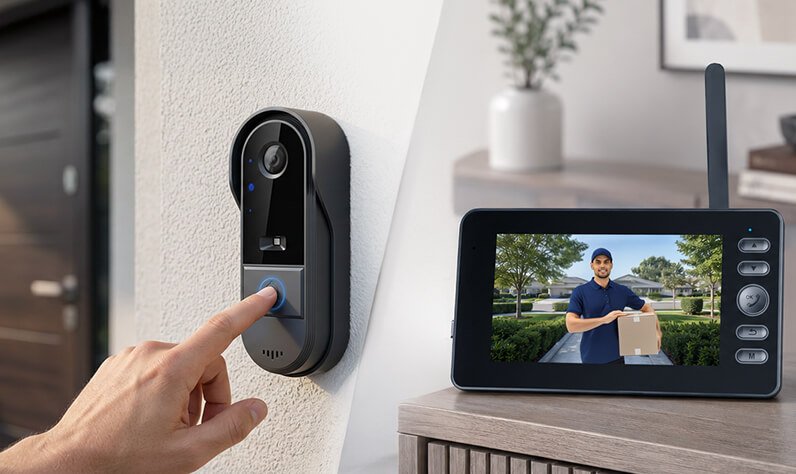
Don't open the door. Stay inside, keep it locked, and check who's there from a safe spot: a peephole, a side window or a doorbell camera. Let them know someone is home (a light, or a few words through the closed door), ask what they want, and call 911 if they try the handle, won't leave or anything feels wrong. If they claim to be police or a utility worker, verify by calling the agency yourself. The easiest way to handle a night knock calmly is to see the porch without going near the door. That's why we recommend the Vital Smart Door Home: a no-app video doorbell with night vision and a portable indoor monitor.
It's 9:30 on a weeknight. You're not expecting anyone, and there's a knock at the door. Then another. Your heart rate jumps, the dog starts barking and every option feels wrong: open it, ignore it, shout through it? Almost everyone has had this moment, and most of us have no plan for it.
It happens more often than you'd think once the clocks change. In most of the US, daylight saving time ends on the first Sunday of November, and suddenly it's dark by dinner time. Deliveries, solicitors, neighbors and lost drivers all start showing up after dark, and a knock you'd ignore at noon feels very different at night. Here's a calm, practical plan.
Why an unexpected night knock happens
Most night-time knocks are harmless. But because you can't tell which is which from the couch, it helps to know the usual reasons:
- Late deliveries: holiday shipping season stretches routes well into the evening.
- Neighbors and lost visitors: a misdelivered package, a wrong address, a dead car battery.
- Solicitors and canvassers: some towns limit evening hours, but not everyone follows the rules.
- Someone asking for help: sometimes genuine, sometimes a pretext to get the door opened.
- "Is anyone home?" checks: some burglars knock or ring first to see whether a house is empty. We cover this in do video doorbells deter burglars?
What to do, step by step
- Don't open the door. Keep it closed and locked, including any chain or storm door. You are never obliged to open your door to someone you weren't expecting.
- Stay out of view of the door glass. Check from a safe spot: a peephole, a side window, or a doorbell camera's indoor screen.
- Turn on the porch light. It helps you see, and it tells the visitor someone is home and paying attention.
- Speak through the door, not across a threshold. A short, calm line works: "Can I help you?" Then: "Please leave a note; we can't open the door right now."
- Verify official-looking visitors. If they say they're police, a utility or a delivery company, ask for a name and ID number, then call the agency on a number you look up yourself.
- Call 911 if needed. Someone trying the handle, refusing to leave, checking windows or saying they need help but won't wait outside: call 911 and tell them police are on the way.
- Report it afterwards. If the visit was suspicious, call the police non-emergency line and give a short description of the person and any vehicle.
Common door-knock tricks to recognize
| What they say | What might be going on | Safe response |
|---|---|---|
| "I need to use your phone, it's an emergency." | A real emergency, or a pretext to get inside | "Stay there, I'm calling 911 for you." Keep the door closed. |
| "I'm from the gas/electric company." | Utilities rarely make unannounced night visits | Ask for ID, call the utility's official number yourself |
| "Package needs a signature." | Usually a late delivery, sometimes a ruse | "Please leave a notice; we'll arrange redelivery." |
| "Is [name] home?" (wrong name) | A mistake, or a check to see who's home | "Wrong house," without confirming who lives there |
| Knock, then silence, then walking around the house | Possibly checking whether the home is empty | Lights on, speak through the door, call 911 if they stay |
What people usually do (and why it's risky)
- Opening "just a crack": a chain or a cracked door is easy to push. Talk through a closed door instead.
- Going outside to check: never confront anyone in the dark; stay inside and call for help.
- Peeking through the curtains: it's hard to see at night and it shows the visitor exactly where you are.
- Pretending nobody's home: silence can tell someone checking for an empty house exactly what they want to hear.
- Relying on a phone app: app doorbells help, but fumbling with a locked phone, a slow app or a dropped WiFi connection at the moment of a knock is stressful.
The common thread: you need to see who's there quickly, from a safe place, without opening anything. That's exactly the job of a video doorbell with an indoor screen. The Vital Smart Door Home, which we reviewed in full, does it with a portable monitor you can carry from room to room, no phone and no WiFi needed. If you've wondered about privacy, see why offline matters in can video doorbells be hacked?
A 5-minute plan for darker evenings
- Agree on a house rule: nobody opens the door after dark for unexpected visitors. If you have kids, use our family door plan.
- Light the porch: a bright porch light or a motion-sensor light makes visitors visible and less anonymous.
- Keep a phone handy: on the nightstand and in the living room, charged.
- Save key numbers: your local police non-emergency line and your utility companies.
- Put a screen between you and the door: a doorbell camera with night vision and an indoor monitor turns "who is that?" into a two-second glance.
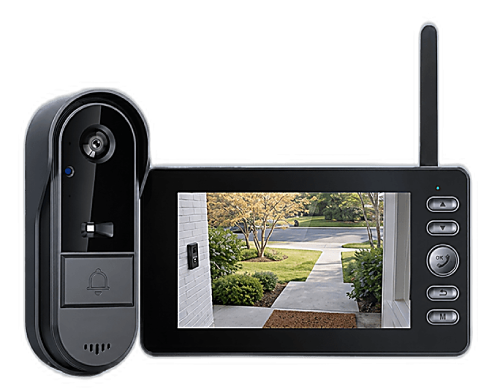
Our recommendation: the Vital Smart Door Home
If you want to answer a night knock calmly, without opening the door, without unlocking a phone and without another app to manage, the Vital Smart Door Home is the option we recommend. It was built for exactly this moment: seeing and talking to whoever is at your door while you stay safely inside.
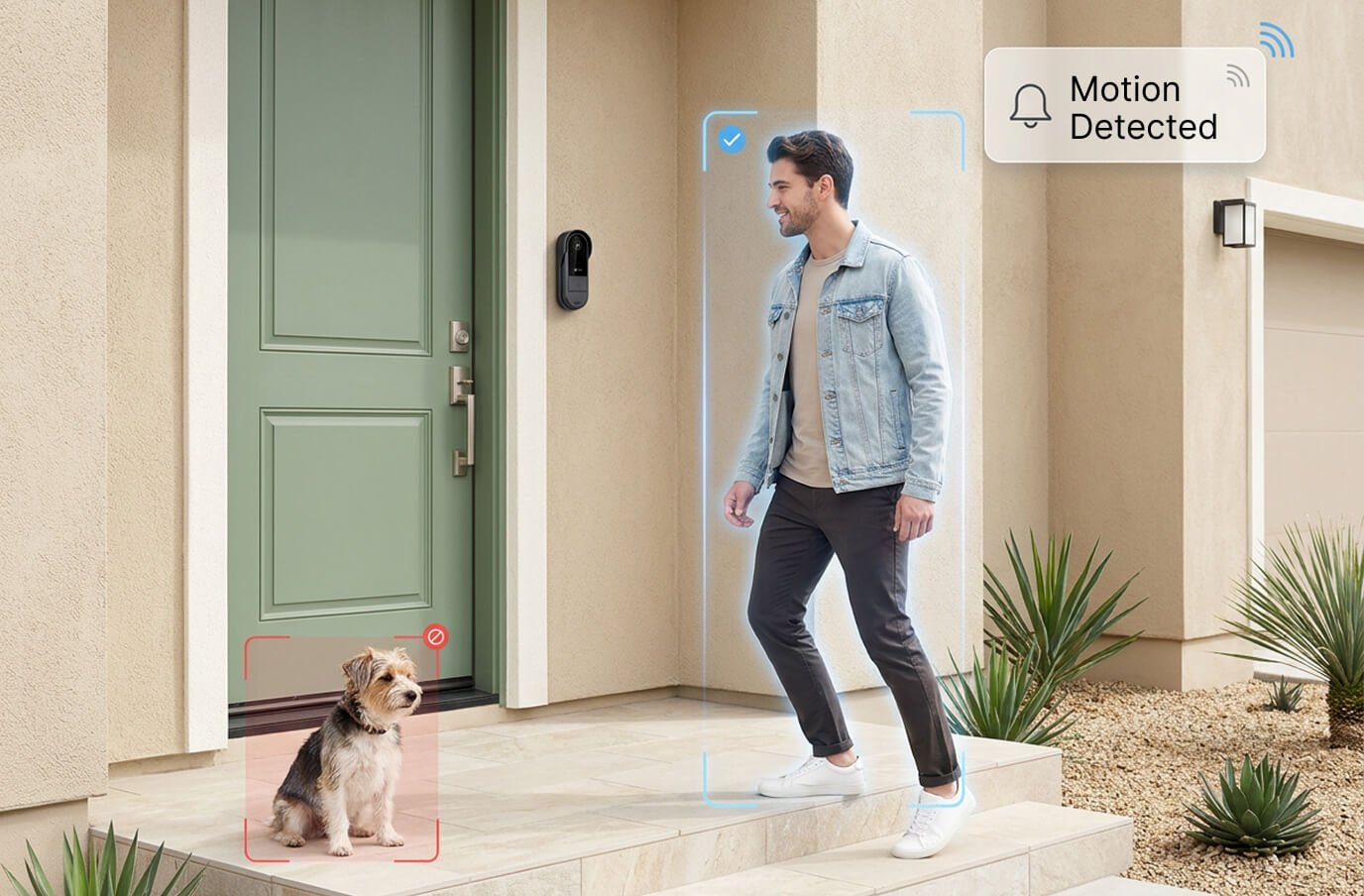
- Night vision and motion detection: a usable view of the porch after dark, the moment unexpected knocks feel scariest.
- A screen you can carry: live video appears on a portable indoor monitor, so you can check the door from the bedroom, the kitchen or the couch.
- Two-way audio: say "Please leave a note" or "I'm calling 911" through the doorbell, not through the door.
- No WiFi, no app, no account: nothing to unlock, nothing to load, and nothing online to hack; the video stays inside your home.
- No monthly fee: pay once, nothing to renew.
- DIY install in minutes: wireless and rechargeable, mounted with adhesive or screws, no wiring, so it can be up before the next dark evening.
It's designed for answering the door safely when you're home, which is exactly when a night knock happens. Because there's no app, it isn't meant for watching the porch from work on your phone.
Our full review scores it 4.6/5. Current pricing on the official site: 1 unit US$99.99 (regular US$222.20), or the 2-pack at US$89.99 each (US$179.98 total), handy for a front and back door. Orders ship from New Jersey within 48 business hours to the USA and Canada, and every purchase is covered by a 30-day money-back guarantee.
Want more background first? Start on our Vital Smart Door Home overview.
Frequently asked questions
Should I open the door if someone knocks at night?
Not if you weren't expecting anyone and can't confirm who it is. Police departments consistently advise keeping the door closed and locked, checking who's there from a safe spot inside, and calling 911 if anything feels wrong. You are never obliged to open your door to an unexpected visitor.
Should I answer or pretend nobody is home?
Many safety experts suggest letting the person know someone is home, without opening the door, for example by turning on a light or speaking through the closed door or a doorbell's two-way audio. Some burglars knock first to check whether a house is empty, so silence can send the wrong signal.
When should I call 911 about someone at my door?
Call 911 if someone is trying the handle or windows, won't leave, says they need help but won't wait outside, seems to be checking several doors, or if you feel in danger. For a suspicious visitor who leaves, you can call your local police non-emergency number to report it.
What if the person says they are police or a utility worker?
Ask for their name and badge or ID number through the closed door, then call the agency yourself using a number you look up, not one they give you. Genuine officers and utility workers expect you to verify. Keep the door closed until you are satisfied.
Why do knocks at night seem more common in November?
In most of the US, daylight saving time ends on the first Sunday of November, so it gets dark around dinner time. Ordinary evening visits, deliveries and solicitors now happen after dark, which makes unexpected knocks feel more unsettling and makes it harder to see who is outside.
Can a video doorbell help when someone knocks at night?
Yes. It lets you see who's at the door from inside, without going near it, and night vision gives you a usable view after dark. With two-way audio you can speak through the doorbell instead of the door. A no-app model with a portable indoor monitor, like the Vital Smart Door Home, does this without WiFi or a phone.