Quick answer
The clearest signs that someone may be casing your house are patterns, not one-off events: the same unfamiliar car parked nearby again and again, the same person walking past slowly and looking at doors and windows, knocks with flimsy excuses, someone photographing your home, or "workers" asking when you're usually out. If you notice them, don't confront anyone: write down details, tell your neighbors, call the police non-emergency line, make your home look lived-in and never open the door to someone you can't see. For that last step, we recommend the no-WiFi Vital Smart Door Home.
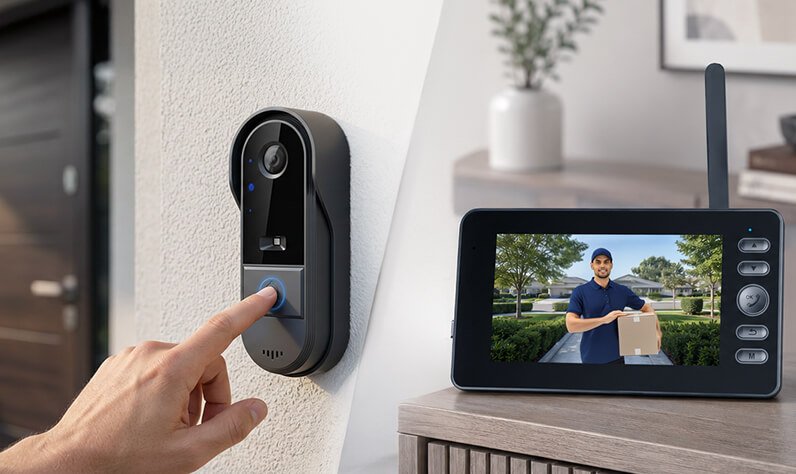
Sometimes it's just a feeling. A car you don't recognize has been parked across the street three evenings this week. Someone knocked, asked for a name nobody in your house has, and walked off without much fuss. On their own these moments mean nothing. Together, they can make you wonder: is someone watching my house?
"Casing" simply means watching a home before a possible break-in: learning when people come and go, whether anyone is home and how easy it would be to get in. Most of what you notice will turn out to be innocent. But it's worth knowing what the real warning signs look like, which popular "signs" are mostly myth, and the calm steps that make your home a harder target either way.
The 8 warning signs, and what each one may mean
1. The same unfamiliar car keeps showing up
A vehicle you don't recognize, parked near your home for long stretches, especially more than once, with someone sitting inside. On its own it may be a delivery driver on a break or a neighbor's visitor. Repeated over several days, at times when your street is usually quiet, it's worth noting.
What it may mean: someone is learning your routine. What to do: note the color, make and plate if you can see them safely from inside, plus dates and times.
2. Someone walks past slowly, again and again
People walk dogs and go jogging; that's normal. What stands out is the same person passing several times, slowing down at your house, looking at side gates, windows or the back of the property rather than straight ahead.
What it may mean: checking entry points and whether anyone is around. What to do: note the time and a description, and mention it to neighbors on either side.
3. Knocks with flimsy excuses
Someone knocks and asks for a person who doesn't live there, says they have the wrong address, offers a "survey", or walks off quickly when you answer. Most of these really are innocent. But a knock is also the simplest way to find out whether a house is empty. If nobody answers, the house looks unoccupied.
What it may mean: a test of whether anyone is home. What to do: answer, but without opening the door. Our guide to someone knocking on your door at night covers exactly how.
4. Someone is photographing or filming your home
Real estate agents, insurance inspectors and curious neighbors take photos too. A stranger who keeps taking pictures of your doors, windows, cameras or car, and leaves when noticed, is different.
What it may mean: recording details to come back to later. What to do: note what you saw and report it to the police non-emergency line.
5. "Workers" who ask about your schedule
Unsolicited contractors, tree trimmers or "utility" people who show up without an appointment and ask questions like when you're usually at work, whether you're going away for the holidays, or how many people live there.
What it may mean: gathering information while looking legitimate. What to do: don't share your schedule, ask for ID through the door, and call the company yourself using a number you look up independently.
6. Things outside are moved or tested
A side gate you always close is open, a motion light has been unscrewed, a window you left locked has been tried, or your trash and recycling look like someone went through them.
What it may mean: someone testing access or looking for information (old boxes from a new TV say a lot). What to do: check locks, put lights back, and break down boxes before putting them out.
7. Something left at your door that nobody collects
A flyer wedged into the door frame, a piece of tape across the gap, a menu hanging on the handle. These are usually just advertising. The issue is what happens next: if it stays there for days, it tells anyone passing that nobody has used that door.
What it may mean: anyone watching can see the house hasn't been used. What to do: remove anything left at the door quickly, and ask a neighbor to do it when you're away.
8. Packages and mail pile up when you're out
This one is about you, not them. A stack of boxes on the step, an overflowing mailbox or a dark house night after night is the clearest "nobody's home" signal there is. It's also how many package thefts start; see delivery drivers and home theft.
What it may mean: your home advertises when it's empty. What to do: hold mail when traveling, use pickup points for valuable orders and put a light on a timer.
Signs at a glance
| Sign | Innocent explanation | When to take it seriously |
|---|---|---|
| Unfamiliar parked car | Visitor, driver on a break | Same car, several days, someone inside watching |
| Person walking past | Dog walker, jogger | Same person, slowing down, looking at gates and windows |
| Odd knock | Wrong address, canvasser | Flimsy excuse, leaves fast, repeats |
| Photos of your home | Real estate, inspector | Focus on doors, windows, cameras; leaves when seen |
| Unscheduled "worker" | Genuine door-to-door sales | Asks about your schedule or who lives there |
| Things moved outside | Wind, kids, animals | Locks tried, lights unscrewed, gate opened |
What about chalk marks and secret symbols?
Every so often, social media fills with warnings about burglars marking houses with chalk, stickers, zip ties or symbols on the curb. There is little reliable evidence that this is common, and most marks on sidewalks and curbs come from utility companies or kids. It doesn't hurt to remove a strange mark, but don't let it distract you: patterns of behavior are much more meaningful than marks.
What to do (and what not to do)
- Don't confront anyone. Your safety comes first, and most suspicious-looking activity turns out to be innocent.
- Write it down. Dates, times, descriptions, vehicle details. A short log turns a vague feeling into something useful.
- Tell your neighbors. Neighbors who know each other notice more, and a neighborhood group makes patterns easier to spot.
- Report it. Call your local police non-emergency line about suspicious activity. If you believe a crime is happening, call 911.
- Make the house look lived-in. Lights on timers, mail held when you're away, no packages left out, curtains in their normal position.
- Harden the obvious entry points. Lock side gates and back doors, keep motion lights working, trim bushes that hide windows.
- Never open the door blind. See who is there first and talk through the door. This one habit takes away both the "is anyone home?" test and the trick of getting you to open up.
That last step is where a video doorbell earns its place. A visible camera at the front door also makes a home look watched; we looked at that in do video doorbells deter burglars? If you want one without WiFi, apps or monthly fees, the Vital Smart Door Home we reviewed is built exactly for answering the door safely from inside.
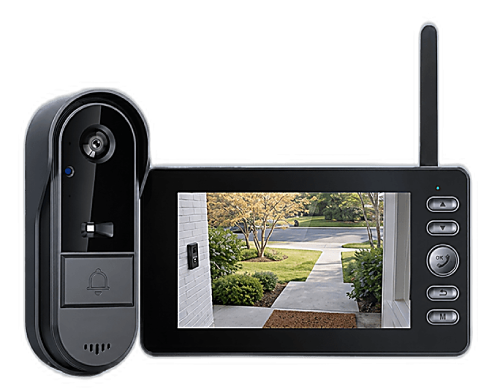
Our recommendation: the Vital Smart Door Home
If any of these signs sound familiar, the simplest change you can make today is to stop opening the door to people you can't see, and to show that someone is home without unlocking anything. The Vital Smart Door Home is the option we recommend for exactly that.
- See every knock first: live video appears on a portable indoor monitor, so you can check the door from the kitchen, the couch or the bedroom.
- Answer without opening: two-way audio lets you speak to whoever is outside, so a "just checking if anyone's home" knock gets a clear answer, through a locked door.
- Night vision and motion detection: a usable view of the porch after dark, when unexpected visitors feel most unsettling.
- A visible camera at the door: it makes your home look watched to anyone walking past.
- No WiFi, no app, no account: it uses its own wireless link, so there's nothing online to hack and nothing that depends on your router.
- No monthly fee and a quick DIY install: pay once; wireless and rechargeable, mounted with adhesive or screws, no wiring.
It's designed for answering the door safely while you're home; because there's no app, it isn't meant for watching the porch from your phone while you're away. For the everyday "who's there?" moments, it's the simplest solution we know.
Our full review scores it 4.6/5. Current pricing on the official site: 1 unit US$99.99 (regular US$222.20), or the 2-pack at US$89.99 each (US$179.98 total), handy for a front and back door. Orders ship from New Jersey within 48 business hours to the USA and Canada, and every purchase is covered by a 30-day money-back guarantee.
Want more background first? Start on our Vital Smart Door Home overview.
Frequently asked questions
What does it mean when a house is being cased?
Casing means someone is watching a home before a possible break-in, trying to learn when people come and go, whether anyone is home, and how easy it would be to get in. It usually looks like ordinary activity repeated too often: the same car, the same person walking by, odd knocks at the door.
Why would someone knock on my door and leave?
Most knocks are innocent: deliveries, neighbors, canvassers or a wrong address. But a knock is also the simplest way to check whether anyone is home. That is why it helps to answer in a way that shows the house is occupied without opening the door, for example by speaking through a video doorbell.
Are chalk marks or symbols a sign my house is targeted?
Stories about secret burglar symbols spread on social media, but there is little reliable evidence that they are common. Most marks on sidewalks and curbs are from utility companies or children. Patterns of behavior, like the same unfamiliar car or person returning, are far more meaningful.
What should I do if I think my house is being watched?
Do not confront anyone. Write down what you see (dates, times, vehicle color, make and plate if you can see it safely), tell trusted neighbors, and call your local police non-emergency line to report suspicious activity. If you believe a crime is happening, call 911. Then make your home look lived-in and answer the door only after you know who is there.
Do video doorbells stop burglars?
No device stops every crime, but a visible camera at the front door makes a home look watched, and being able to see and talk to whoever knocks without opening the door removes one of the easiest ways to check if a house is empty or to get you to open up.