Quick answer
Yes, you can get a doorbell camera without a cloud subscription: some record to a local SD card, and some, like the Vital Smart Door Home, never touch the internet at all and show the visitor on a portable indoor monitor. Why it matters: in May 2023 the US Federal Trade Commission (FTC) said weak privacy and security at Ring let employees and contractors access customers’ private videos and let hackers take over some cameras. Ring agreed to pay $5.8 million in refunds. If your video never leaves your home, there is no online library to leak and no monthly plan to pay.
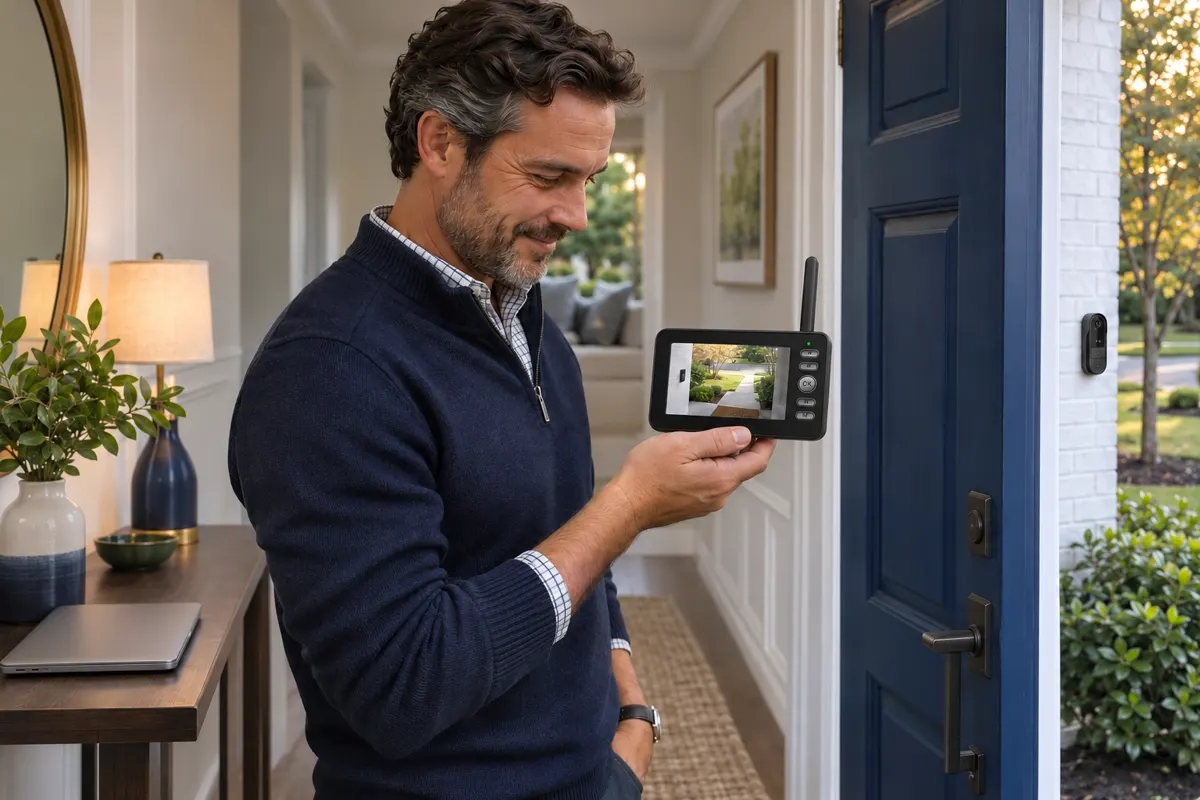
Searches for “doorbell camera without cloud subscription” have jumped about 180% on Google over the last three months. Part of it is money: monthly plans add up. Part of it is trust. People have started asking a simple question that marketing rarely answers: where does the video of my front door actually go, and who can see it?
The clearest public answer comes from a real government document: the FTC’s 2023 action against Ring, one of the best-known doorbell camera brands. We read the FTC’s own consumer alert and the coverage of the complaint, and below we explain it the way we would to a neighbor: what happened, what the settlement requires, what it does not prove, and what it means if you are choosing a doorbell this winter.
The case in one minute
| Question | Answer |
|---|---|
| Who acted | The US Federal Trade Commission (FTC), the national consumer protection agency |
| When | Announced May 31, 2023 |
| Company | Ring, a home security camera and video doorbell brand |
| Main concerns | Employee and contractor access to private customer videos; weak security that let hackers take over accounts and cameras |
| Money | $5.8 million, to be used for refunds to affected customers |
| Other terms | A privacy and security program with regular assessments, and deletion of videos and data it should not have kept |
| Primary source | FTC consumer alert, May 31, 2023 |
What the FTC said happened
According to the FTC, the problems had two sides: people inside the company, and people outside it.
- Inside access. The FTC said Ring gave employees and contractors broad access to customers’ private videos. In its complaint, the agency described one employee who viewed thousands of video recordings of female customers in private spaces of their homes, such as bedrooms and bathrooms.
- Videos used without clear consent. Coverage of the complaint also reported that customer videos were used to train algorithms without adequate consent.
- Outside attacks. The FTC said hackers took advantage of security weaknesses to take control of some customers’ accounts and cameras. In the agency’s words, some used them to harass, insult and proposition children and teens, and some live-streamed customers’ videos.
None of this required anyone to break into a house. It happened through accounts, servers and passwords: the parts of a cloud camera you never see.
What the settlement requires
- $5.8 million paid for refunds to affected customers.
- A privacy and security program, with regular independent assessments over the long term (news coverage reported a 20-year period).
- Deletion of customer videos and data the company should not have kept, and limits on profiting from data it obtained improperly.
As is common with FTC settlements, the company did not admit wrongdoing, and the order sets rules for the future rather than proving that every customer was affected.
The limits: what this case does not prove
A fair reading matters, so here are the boundaries:
- It is one company’s case. It does not mean every cloud camera brand behaves this way.
- Most incidents involved account security. Strong passwords and two-factor authentication block many takeover attempts, and brands have tightened their systems since.
- It is from 2023. Policies change; always read the current privacy policy of any camera you buy.
What the case does show, clearly and officially, is a structural point: once video is stored on someone else’s servers, its privacy depends on that company’s staff rules, security and choices, not only on yours.
What it means for your front door
Think of your doorbell camera in terms of where the picture travels:
| Type | Where video goes | Monthly fee? | Watch from away? | Privacy depends on |
|---|---|---|---|---|
| Cloud app doorbell | Company servers, then your phone | Often, for history | Yes | The company + your account security |
| Local-storage doorbell (SD card / base) | A card or box in your home; app for live view | Usually no | Usually yes, via app | Your account + the device |
| No-WiFi doorbell with indoor monitor | Straight from porch to the monitor in your hand | No | No | The physical devices in your home |
If you need to watch your porch from the office or on vacation, a cloud or app doorbell does something an offline one cannot, and you should secure it well (see below). But if what you really want is to see who knocked and talk to them before opening, from the kitchen or the couch, a no-cloud doorbell gives you that with nothing online to worry about. We explain the radio link behind it in what FHSS 2.4G is, and the honest pros and cons in what a no-WiFi video doorbell can and can’t do.
If you keep a cloud camera: 6 steps the FTC case points to
- Use a long, unique password for the camera account, never one you use elsewhere.
- Turn on two-factor authentication, so a stolen password alone is not enough.
- Keep the app and firmware updated.
- Review shared users and remove old family members, sitters or previous owners.
- Check video retention and delete clips you do not need; less stored video means less to lose.
- Point indoor cameras away from private rooms, as the FTC’s examples show why.
The FTC also suggests reviewing app privacy settings and permissions. For broader hacking risks, see our guide on whether video doorbells can be hacked.
Our recommendation: the Vital Smart Door Home
If you want a doorbell camera with no cloud subscription and no online video library at all, the Vital Smart Door Home is the one we recommend. It was made exactly for people who want to see and talk to visitors from inside the house without accounts, apps or monthly fees: the outdoor camera talks only to the portable monitor in your hand.
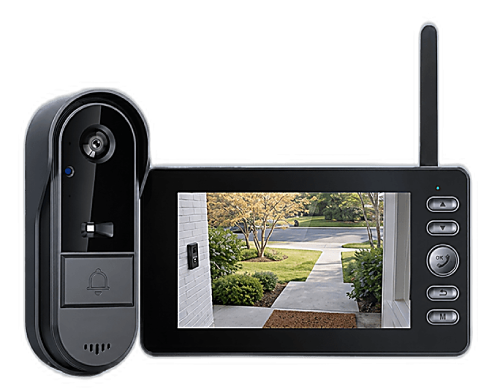
- No cloud, no account, no app: a direct FHSS 2.4G link between camera and monitor; nothing is uploaded anywhere.
- No monthly fee, ever: pay once; an optional SD card at checkout if you want your own recordings at home.
- See and talk before you open: live video, two-way audio, motion detection and infrared night vision.
- Easy for everyone: kids and older parents just look at the screen; no passwords to forget.
- Renter-friendly setup: charge, pair automatically and mount with adhesive or screws, with no wiring.
Our full review scores it 4.6/5. Current pricing on the official site: 1 unit US$99.99 (regular US$222.20), or the 2-pack at US$89.99 each (US$179.98 total). Orders ship fast from New Jersey to the USA and Canada, and every purchase is covered by a 30-day money-back guarantee.
Want more background first? Start on our Vital Smart Door Home overview.
Frequently asked questions
Is there a doorbell camera without a cloud subscription?
Yes. Some doorbells store video on a local SD card or a base station, and some, like the Vital Smart Door Home, skip the internet entirely and send live video to a portable indoor monitor over a direct FHSS 2.4G radio link. With no cloud account there is no monthly plan to pay and no online video library to protect.
What did the FTC say about cloud doorbell cameras?
In May 2023 the FTC said Ring's weak privacy and security practices let employees and contractors access customers' private videos and let hackers take over some cameras to harass people, including children. Ring agreed to pay $5.8 million for customer refunds, set up a privacy and security program and delete videos it should not have kept. Ring did not admit wrongdoing as part of the settlement.
Are cloud doorbell cameras unsafe?
Not automatically. Many people use them safely with a strong unique password, two-factor authentication and careful privacy settings. The FTC case shows that cloud storage adds risks you cannot fully control yourself, which is why some households prefer a camera that keeps video at home.
How can I secure the doorbell camera I already have?
Use a long, unique password, turn on two-factor authentication, keep the app and firmware updated, review who has shared access, check how long videos are stored and delete clips you do not need. The FTC recommends reviewing app privacy settings and permissions regularly.
What is the trade-off of a doorbell with no cloud?
You cannot watch the door from your phone when you are away from home, and an offline doorbell without an SD card does not keep a video history. If you mainly want to see and talk to visitors while you are inside, those trade-offs rarely matter.
Does the Vital Smart Door Home need a subscription?
No. It has no WiFi, no app, no account and no monthly fee: the rechargeable outdoor camera pairs with a portable indoor monitor over FHSS 2.4G. Recording is optional with an SD card at checkout. Prices on the official site are US$99.99 for 1 unit or US$89.99 each in the 2-pack, with a 30-day money-back guarantee.