Quick answer
Doorbell anxiety is the jolt of stress many people feel when the doorbell rings or someone knocks unexpectedly: a racing heart, freezing, hiding or pretending not to be home. It usually comes from not knowing who is outside and feeling pressured to decide in seconds. What helps most is taking the surprise and the pressure away: a simple door plan, a few calming steps, and a way to see and talk to the visitor before you get up, which is exactly what a video doorbell with an indoor monitor gives you.
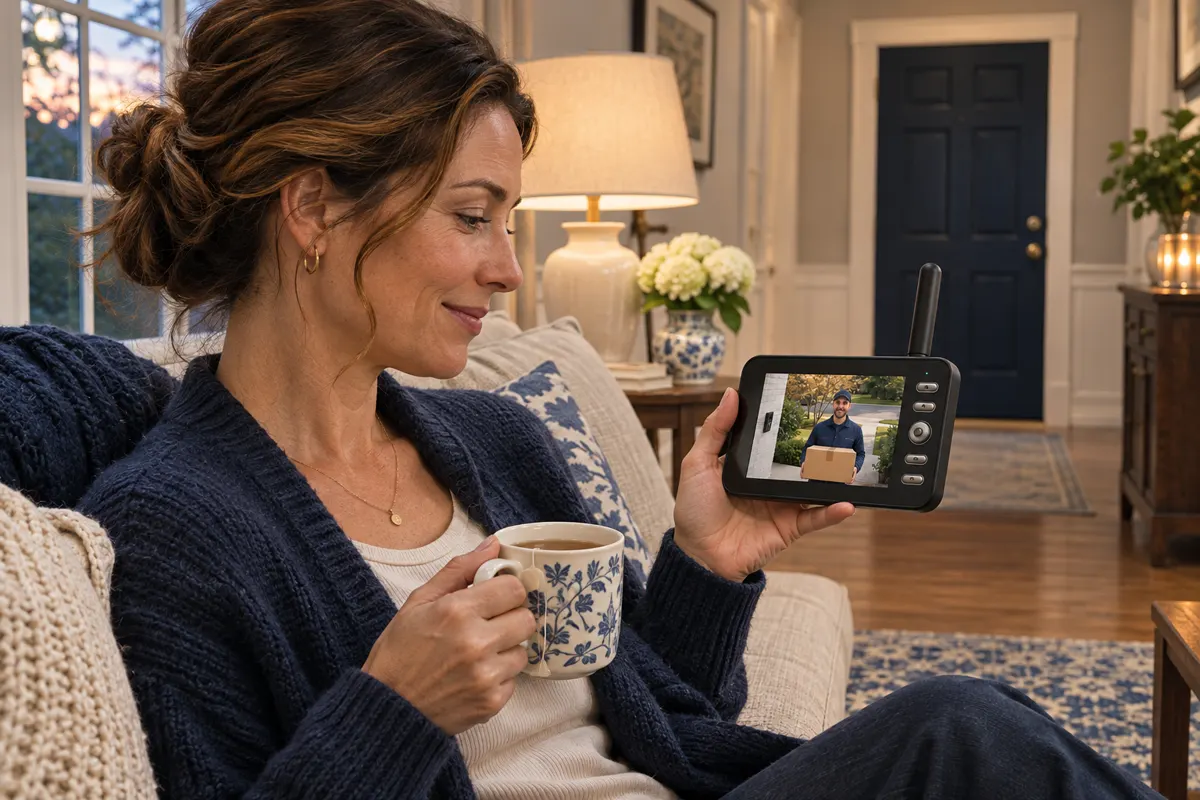
If your stomach drops when the doorbell rings, you are far from alone. Online, thousands of people describe the same thing: the ring, a split second of panic, then tiptoeing, peeking through the blinds or waiting silently until the visitor leaves. A viral thread a few years ago had people of all ages admitting they are “scared” to answer the door. It is common enough that people now search for it by name: doorbell anxiety.
This guide looks at the feeling itself: why it happens, how it affects your mood, sleep and relationships at home, and practical ways to feel calmer, from free mental tricks to small changes at the front door. We will not diagnose anything, and we will tell you when it is worth talking to a professional.
Why the doorbell feels so stressful
A doorbell combines three things the brain dislikes: a sudden loud sound, an unknown person and a demand to act now. In a few seconds you have to decide whether to stop what you are doing, get up, open a door to a stranger and maybe make conversation or say no. For many people that is an instant stress response.
- Uncertainty: most homes now expect visitors to text first, so an unannounced ring feels unusual, even alarming.
- Feeling trapped: once you open the door, it is hard to escape a sales pitch or an awkward chat.
- Safety worries: news about porch pirates, scams and break-ins primes us to imagine the worst.
- Past experiences: a bad encounter at the door, or a stressful period in life, can leave the body on alert.
- Sensory sensitivity: for some people, including many autistic adults, a sharp chime or loud knock is simply overwhelming.
How it shows up in everyday life
Doorbell anxiety rarely stays at the door. It spills into the rest of the day:
- Mood: a jolt of adrenaline that takes a while to settle, leaving you tense or irritable.
- Home life: arguments about who has to answer, or one person always being “the door person”.
- Missed deliveries and visitors: packages go back to the depot, neighbors stop dropping by.
- Feeling unsafe at home: the place that should feel safest starts to feel exposed, especially at night or when you are home alone.
- Guilt and embarrassment: many people feel silly about it, which makes them less likely to talk about it.
None of this means something is “wrong” with you. It means a common stressor is hitting a nervous system that is doing its job a little too well.
What helps: practical strategies
In the moment
- Pause and breathe out slowly. A long exhale (count four in, six out) tells your body the moment is manageable.
- Remember: you are allowed not to open. A closed door is not rude. You can speak through it, or not respond at all.
- Use a short script. “Please leave it on the step, thank you” or “Not interested, have a good day” removes the pressure to improvise.
Over the next week
- Agree a household door plan: who answers, which visitors are expected, what to say to strangers. We have a family version in our door plan for kids.
- Ask friends and family to text before visiting. Fewer surprises, fewer jolts.
- Set delivery instructions in your shopping accounts so couriers leave packages without ringing.
- Change the sound. A softer chime, or lower volume, makes a real difference for sound-sensitive people.
At the door itself
The biggest relief comes from removing the unknown. When you can see who is outside, from where you are sitting, the brain no longer needs to imagine the worst. That is the job of a video doorbell. The catch with many models is that they add a new stress: phone notifications all day, apps, passwords, WiFi drops and monthly plans. Our guide on someone knocking at night covers the safety side; here the goal is calm.
| Situation | Without a camera | With an indoor monitor |
|---|---|---|
| Unexpected ring | Freeze, guess, peek through the blinds | Glance at the screen from the sofa |
| Delivery person | Open the door or miss the parcel | Say “leave it on the step” through the speaker |
| Salesperson or stranger | Awkward conversation at an open door | Decline politely without opening |
| Knock at night | Lights off, heart racing | Night vision shows who is there |
When to talk to a professional
If the fear of the door is intense, lasts a long time, or comes with panic attacks, avoiding leaving the house, or worry that spills into many parts of life, talk to your doctor or a licensed therapist. Anxiety is very treatable. The National Institute of Mental Health explains the signs and the help available. A device can make the door easier; it does not replace care for anxiety that is affecting your life.
Our recommendation: the Vital Smart Door Home
If the unknown at the door is what makes your heart race, the Vital Smart Door Home is the doorbell we recommend. It takes the surprise away without adding any new stress: no app pinging your phone, no WiFi to drop, no account and no monthly fee. When someone rings, you simply look at the portable monitor wherever you are in the house and decide calmly what to do.
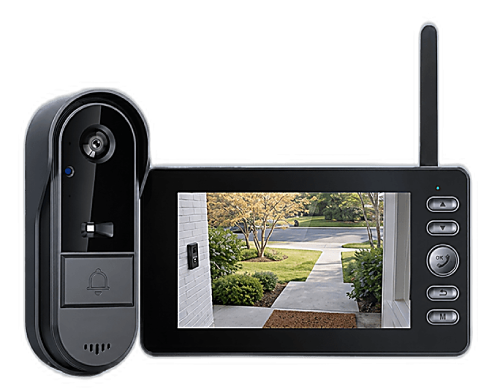
- See before you move: live video on a portable monitor you can keep on the sofa, desk or nightstand.
- Talk without opening: two-way audio lets you say “leave it on the step” or “no thank you” from inside.
- Calm at night: motion detection and infrared night vision show who is there after dark.
- No digital clutter: a direct FHSS 2.4G link between camera and monitor; no WiFi, no app, no account, no monthly fee.
- Easy setup: charge, pair automatically and mount with adhesive or screws, with no wiring.
Our full review scores it 4.6/5. Current pricing on the official site: 1 unit US$99.99 (regular US$222.20), or the 2-pack at US$89.99 each (US$179.98 total). Orders ship fast from New Jersey to the USA and Canada, and every purchase is covered by a 30-day money-back guarantee.
Want more background first? Start on our Vital Smart Door Home overview.
Frequently asked questions
What is doorbell anxiety?
Doorbell anxiety is the stress many people feel when the doorbell rings or someone knocks unexpectedly: a racing heart, freezing, hiding or pretending not to be home. It is not a medical diagnosis, but it is very common, and it usually comes from not knowing who is outside and feeling pressured to decide quickly.
Why does the doorbell make me so anxious?
A doorbell combines a sudden loud sound, an unknown person and pressure to act right away. Many people also worry about scams, strangers or awkward conversations, and some are simply sensitive to sharp sounds. Past bad experiences at the door can keep the body on alert.
Is it rude not to answer the door?
No. You are never obliged to open your door to an unexpected visitor. You can speak through the door, use a short script such as please leave it on the step, or not respond. Friends and family can be asked to text before they visit.
How can I stop feeling anxious when someone knocks?
Take the surprise and the pressure away: breathe out slowly, remind yourself you do not have to open, agree a household door plan, ask visitors to text first, set delivery instructions and lower or soften the chime. Being able to see who is outside before you move removes most of the uncertainty.
When should I get help for anxiety about the door?
If the fear is intense, lasts a long time, comes with panic attacks or makes you avoid leaving the house or daily activities, talk to your doctor or a licensed therapist. Anxiety is very treatable, and the National Institute of Mental Health has clear information on the help available.
How does the Vital Smart Door Home help with doorbell anxiety?
It shows the visitor on a portable indoor monitor you can keep next to you, with two-way audio and night vision, so you can see and talk before you decide to open. It needs no WiFi, app, account or monthly fee. Official-site prices are US$99.99 for 1 unit or US$89.99 each in the 2-pack, with a 30-day money-back guarantee.